
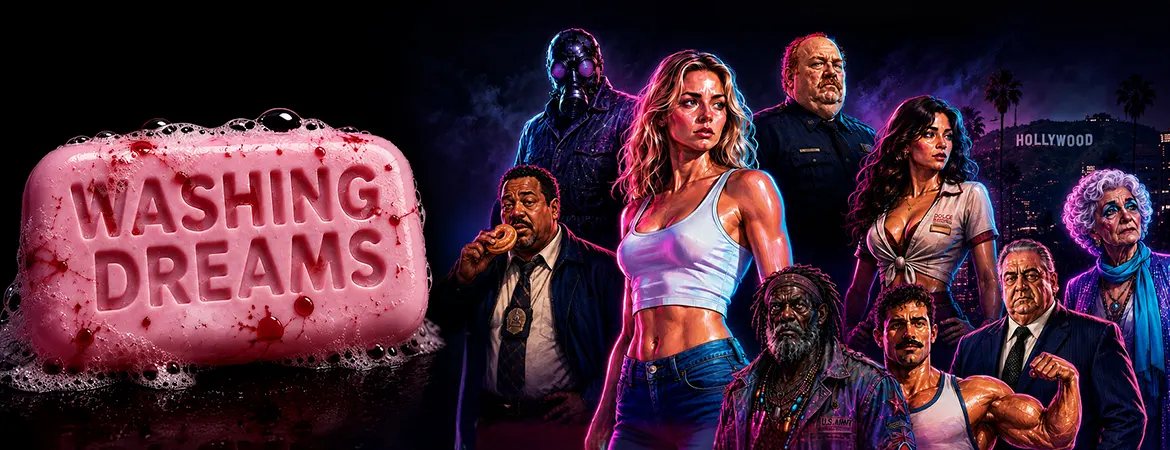
Inside Washing Dreams: Behind the Scenes of an AI-Native Thriller
Hollywood, 1984. A late-night laundromat. Dreams of fame, lost souls, and a series of young women who seem to vanish without a trace.
With Washing Dreams, our teams are developing an original cinematic project somewhere between a psychological thriller, film noir and a new form of AI-assisted filmmaking.
But from the beginning, Washing Dreams was never intended to be a technology demonstration.
It was conceived as a complete fictional universe, with its own characters, locations, visual identity, music, mysteries and mythology, combining human writing, art direction, filmmaking, editing, sound design and artificial intelligence.
It Started With a Story, Not With AI
Before generating a single image, we first had to understand what kind of film we wanted to make.
The idea behind Washing Dreams came from our fascination with Hollywood in the 1980s, but not only the glamorous Hollywood of movie premieres, limousines and movie stars. We were interested in the people living just outside the spotlight.
Aspiring actors waiting for their first real part. Performers making a living impersonating celebrities. Waitresses dreaming of another life. Former stars slowly being forgotten. People who had arrived in Los Angeles convinced that something extraordinary was going to happen to them.
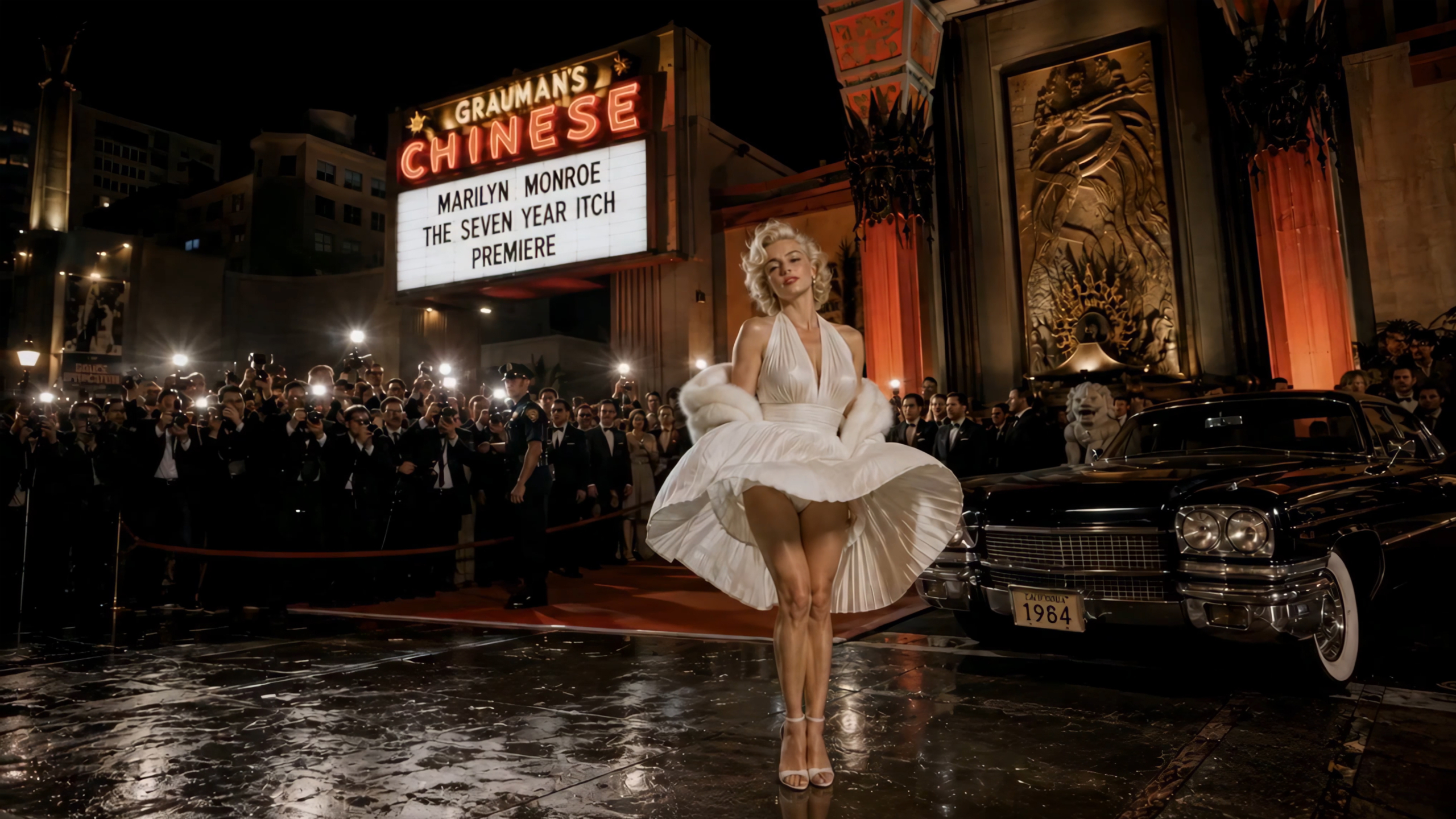
Hollywood has always been a factory of dreams. But it is also a place where thousands of dreams never become reality.
That contrast became the emotional foundation of Washing Dreams.
Hollywood, 1984
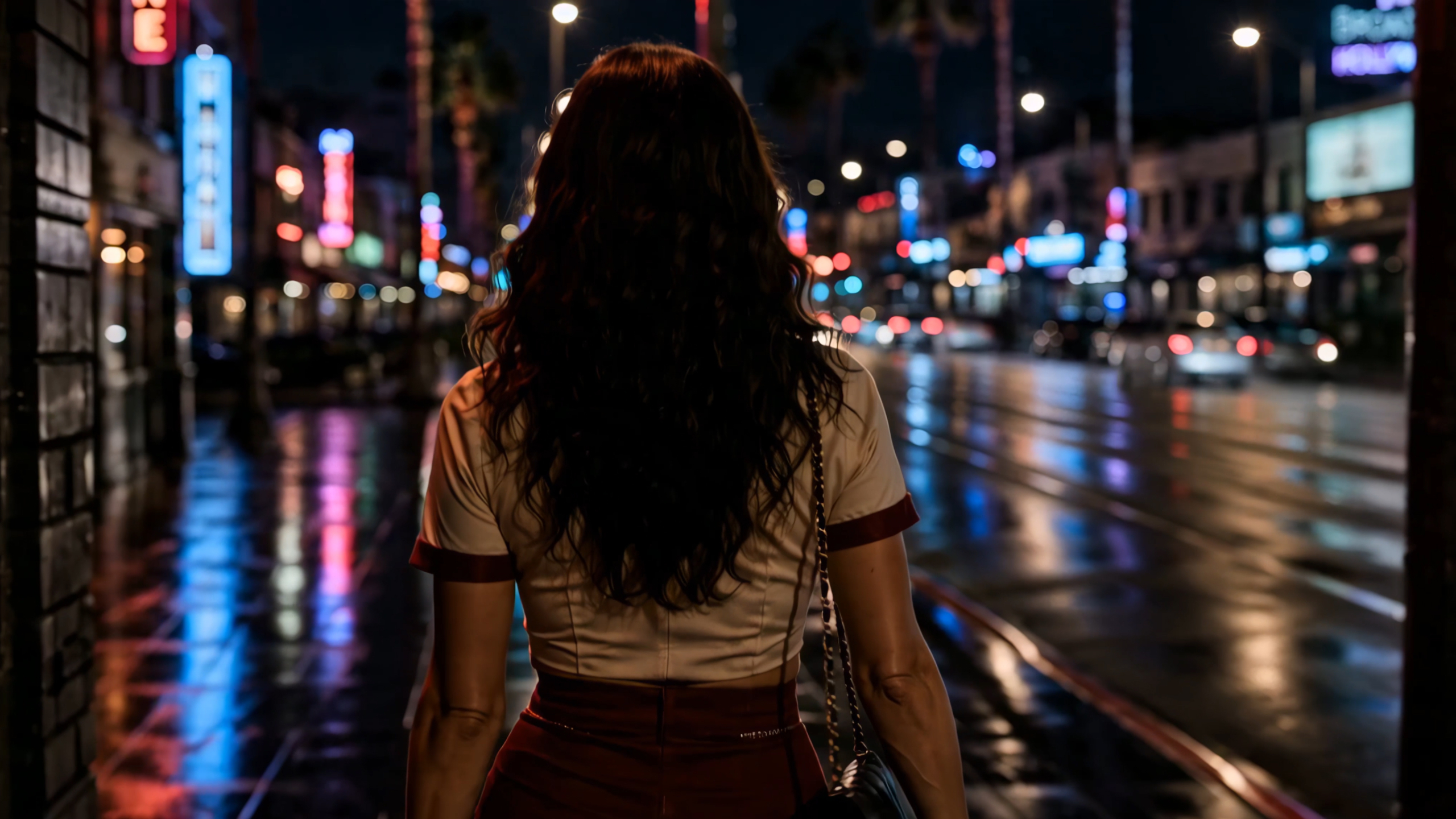
The story takes place in Los Angeles in the mid-1980s, when thousands of young artists were arriving in California hoping to become the next face on a movie poster.
Behind the neon lights and promises of success, however, lies another Hollywood. A city capable of creating stars, and just as capable of forgetting those who never make it into the spotlight.
In this world, several young women mysteriously disappear. There is no supernatural explanation.
Instead, Washing Dreams borrows from the language of the whodunit, psychological thriller and film noir, inviting the audience to pay attention to details, question every character and gradually uncover what might be hiding behind the ordinary appearance of a neighborhood laundromat.
A Laundromat Full of Lost Dreams
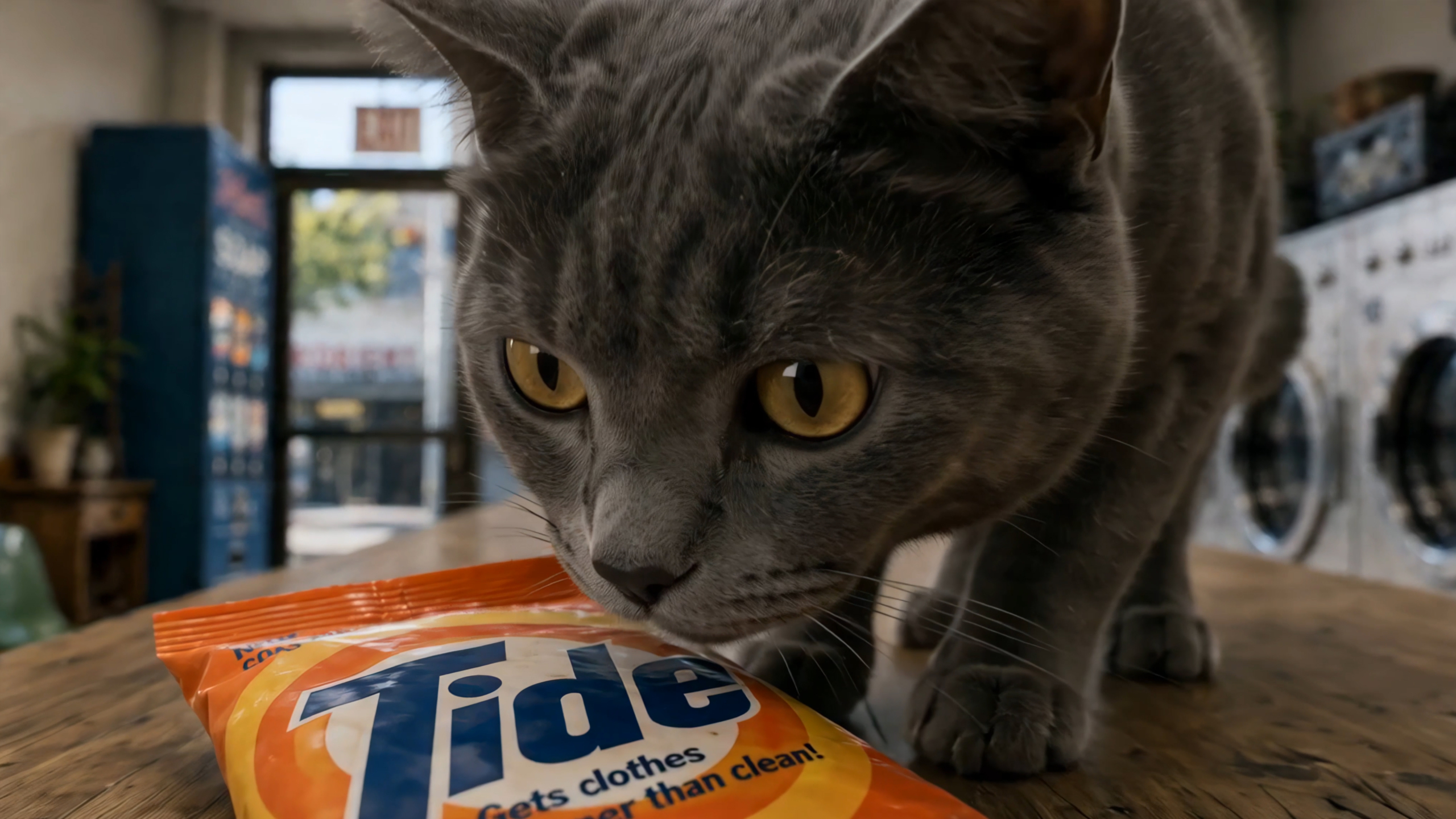
The laundromat became the perfect setting for the story. It is ordinary, anonymous and almost invisible, a place where people from completely different backgrounds can unexpectedly find themselves sitting next to one another for twenty or thirty minutes.
Nobody really comes there because they want to. They simply have to wait.
Aspiring actors, former celebrities, night workers, policemen, tourists, outsiders and neighborhood regulars cross paths while their clothes spin endlessly inside the machines. For a brief moment, their lives intersect.
In Washing Dreams, the laundromat gradually becomes a refuge, a confession booth and a miniature theatre. People arrive carrying their dirty clothes, but also their ambitions, frustrations, memories, regrets and secrets.
That is where the title finds its meaning. Everyone is washing something. Clothes, perhaps.
But sometimes also mistakes, disappointments… or sins.
Characters Who Could All Be Hiding Something
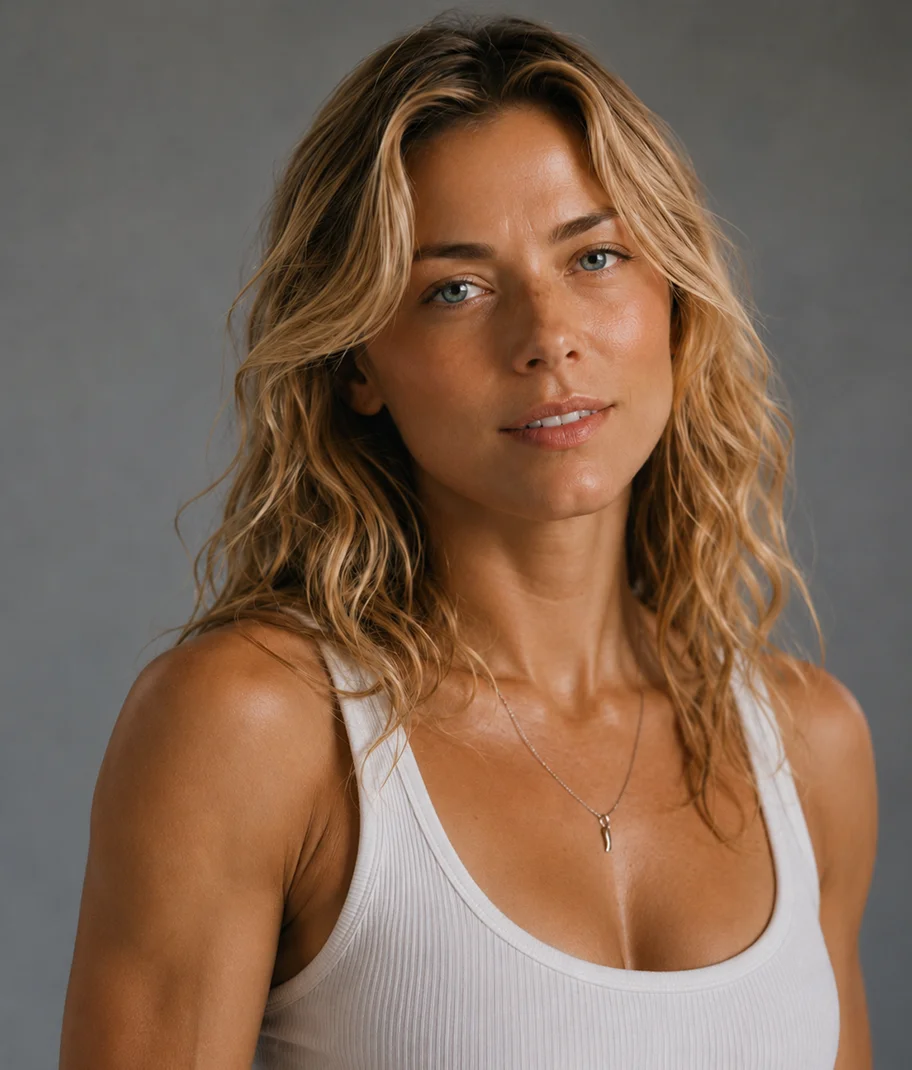
Carla Marlow dreams of becoming an actress while earning money as a Marilyn Monroe impersonator.
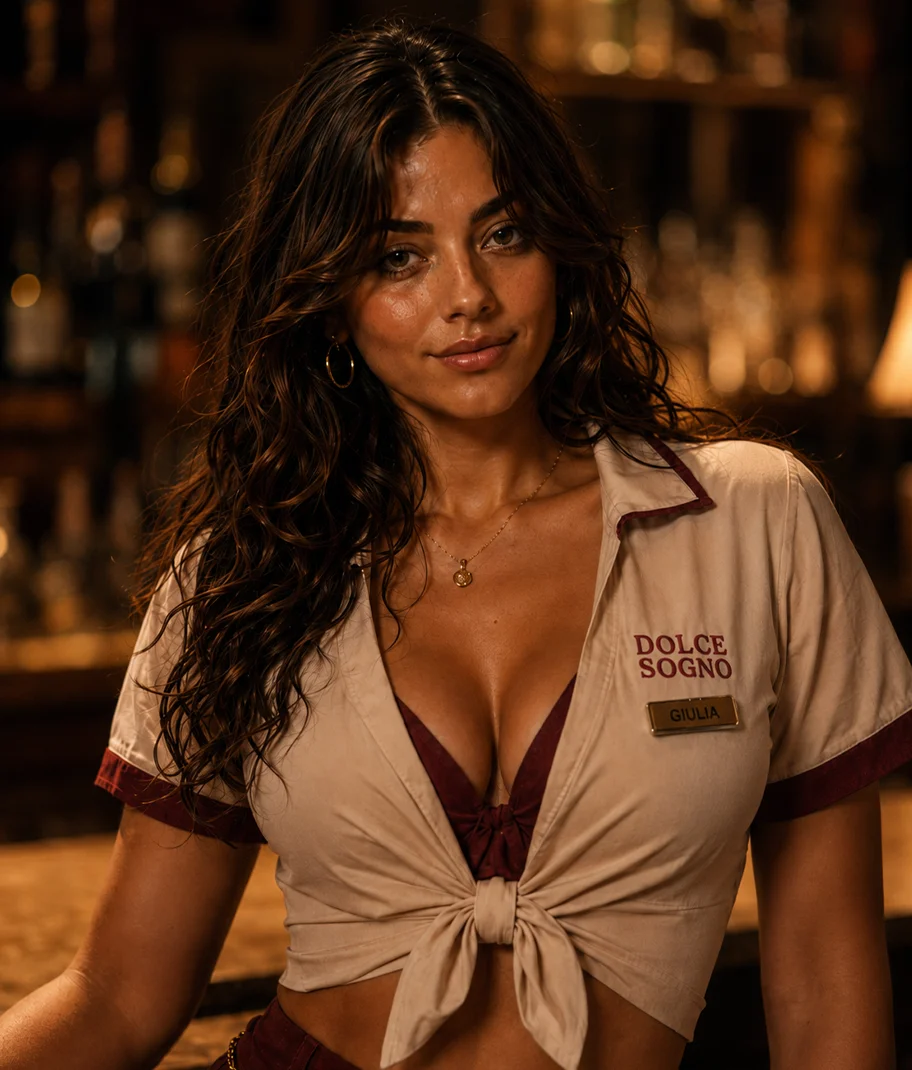
Giulia Rossi works as a waitress at the Dolce Sogno while trying to survive in Los Angeles, until she mysteriously disappears.
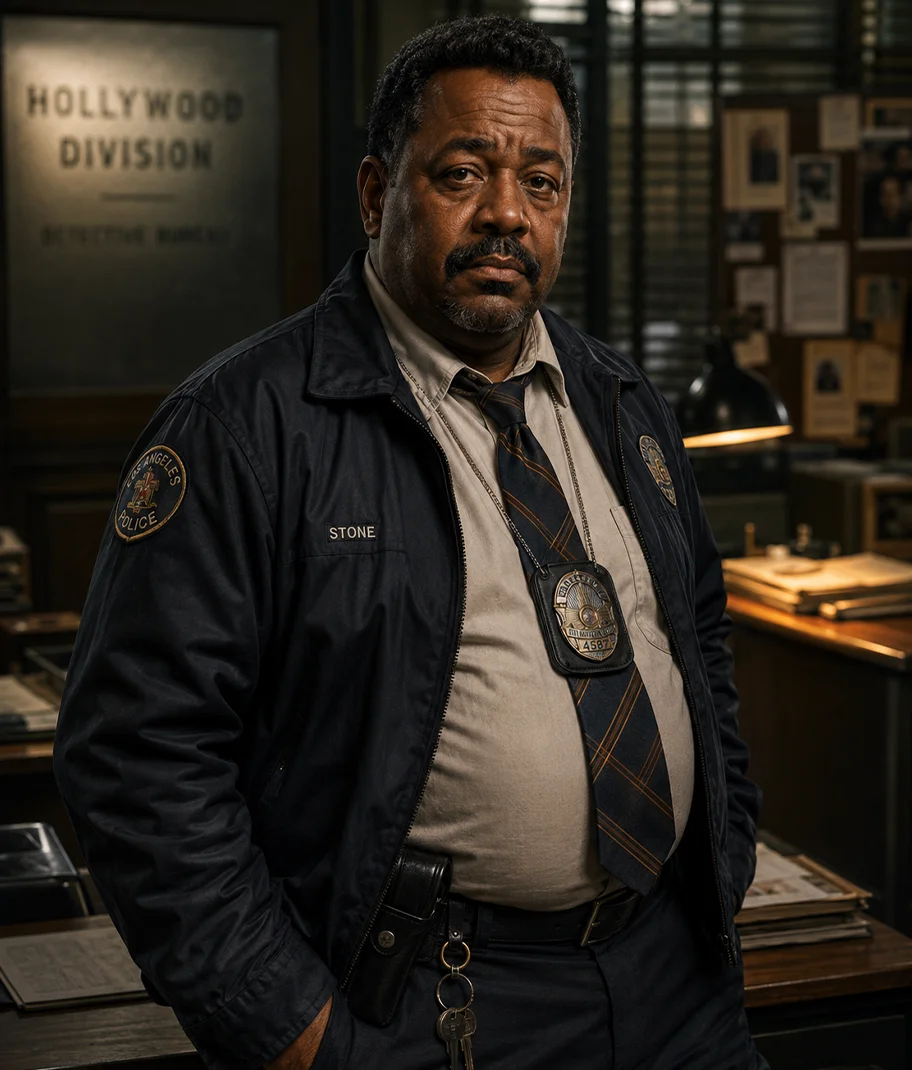
Michael Stone is a detective attempting to connect cases that nobody else seems particularly interested in connecting.
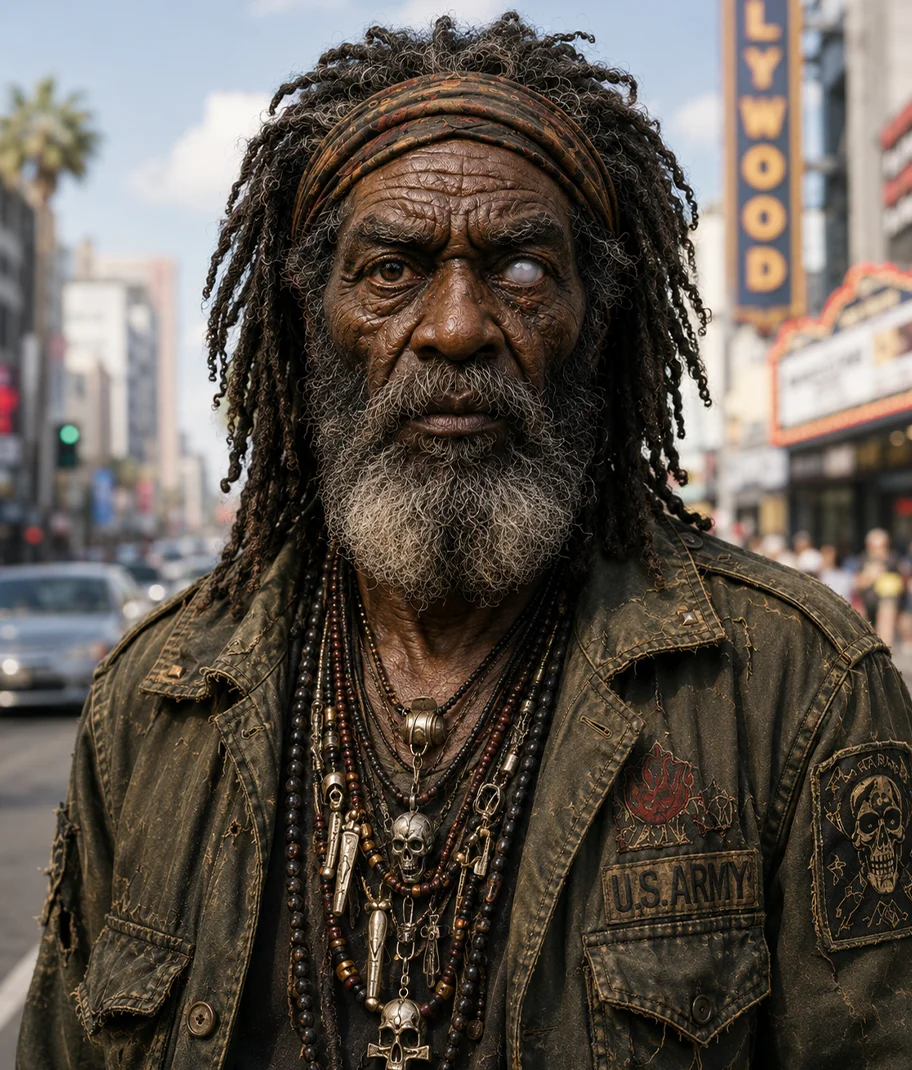
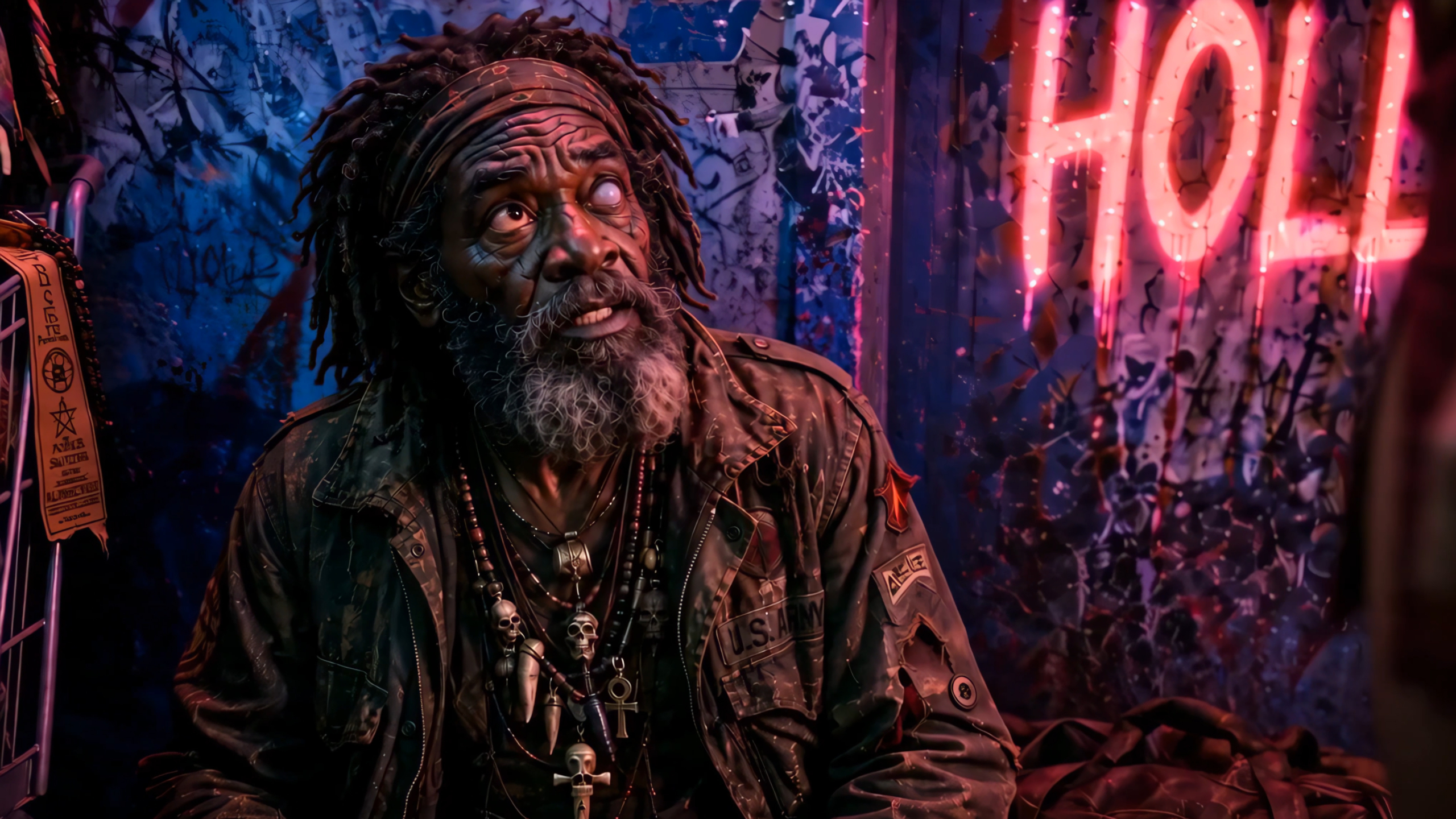
Marvin Beauregard, a Vietnam veteran shaped by his past, seems to notice things that everyone else would rather ignore.
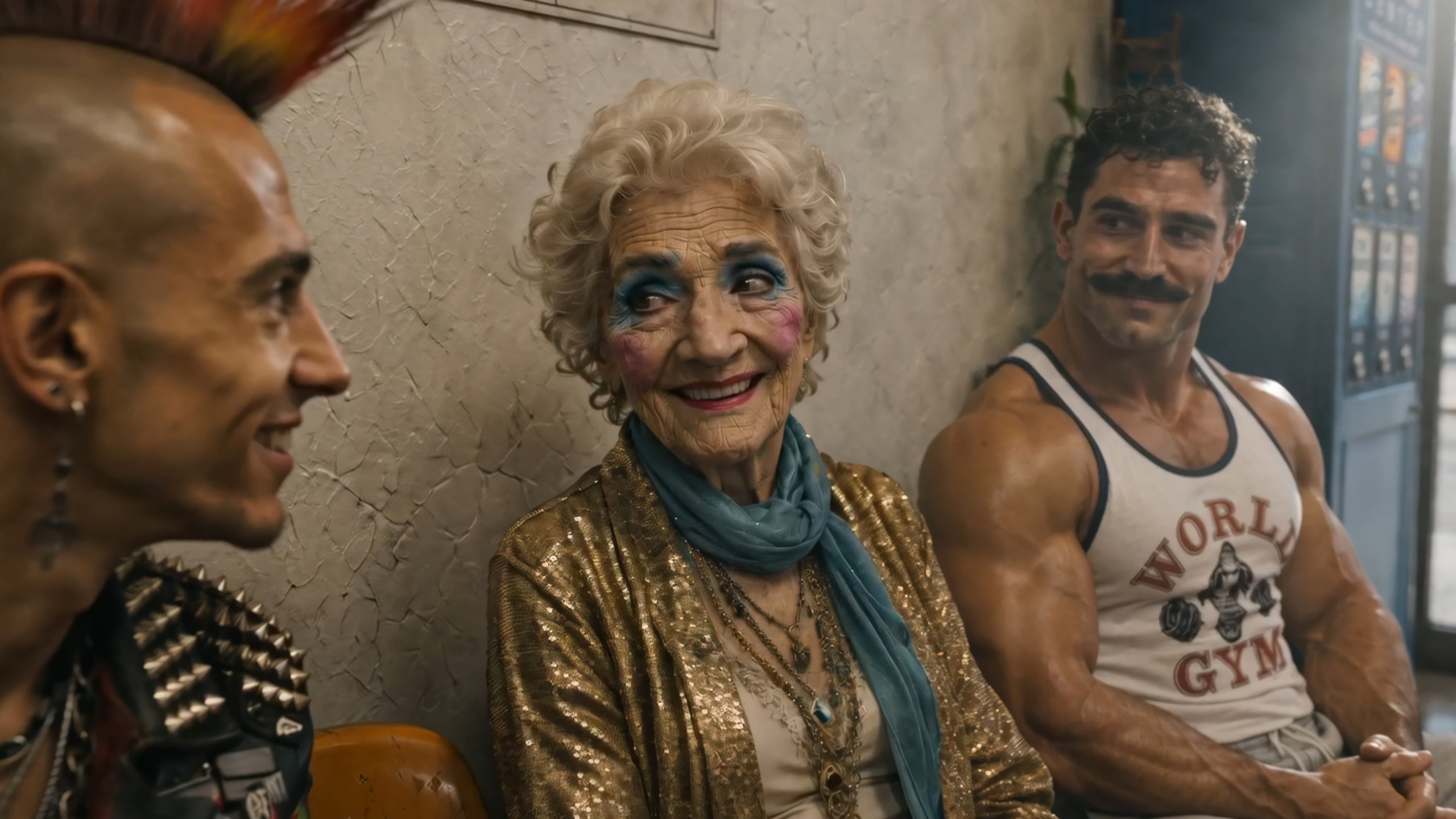
Beyond these central figures, the world of Washing Dreams is populated by many other characters who have not yet been fully revealed.
Some will appear only briefly, while others may become increasingly important as the story develops. Each brings a different piece of 1980s Hollywood into the laundromat, new ambitions, secrets, memories and possible connections to the mystery.
Part of the experience of Washing Dreams is discovering these characters progressively and understanding how their stories may eventually intersect.
Music and sound
Music is another important part of the identity of Washing Dreams. An original song was developed around the themes of Hollywood, fame, broken dreams and the people disappearing behind the lights.
Positioned somewhere between dark pop and cinematic thriller music, it extends the identity of Washing Dreams beyond the film itself. A karaoke version also became part of the universe, echoing the singing machines and popular culture of the 1980s.
Sound design also helps transform ordinary objects into narrative signals: washing machines turning, fluorescent lights flickering, coins falling, telephones ringing and moments of silence all contribute to the feeling that something is wrong.
AI-Native, Human-Directed
Washing Dreams was conceived as an AI-native production, with artificial intelligence used throughout visual research, character development, environment creation, shot generation and movement.
But AI does not make the film by itself. Every sequence still begins with a creative decision: framing, lighting, costume, expression, camera movement, rhythm and narrative intention.
The generated material then has to be selected, modified, edited, composited and combined with dialogue, sound design, music and visual effects. For us, AI is not a replacement for filmmaking; it is another filmmaking tool, in the same way CGI, digital compositing or virtual production transformed production workflows before it.
What makes it especially interesting is that smaller creative teams can now attempt worlds and visual ideas that would previously have required much larger production infrastructures.
A Hybrid Production Pipeline & the Future of Washing Dreams
Produced by our teams, Washing Dreams combines traditional filmmaking and post-production with AI tools including Runway, Seedance, After Effects, ElevenLabs, Suno, Photoshop, Claude and ChatGPT.
The real challenge is not generating individual shots, but building a coherent cinematic world: characters must remain recognizable from one scene to another, locations have to stay consistent, costumes and props must match, and every image needs to feel as though it belongs to the same city, the same year and the same story. This continuity is where a large part of the human creative work takes place, through writing, art direction, selection, editing, compositing, sound and countless creative decisions.
From the beginning, Washing Dreams was also imagined as more than a standalone film: it is the foundation of an original IP that can expand through new episodes, character-driven stories, music videos, immersive experiences and interactive formats, with many more characters and parts of this universe still waiting to be discovered.
For us, this is where AI-assisted filmmaking becomes truly exciting: not as a way to replace ideas or creative direction, but as a new set of tools allowing filmmakers to build richer, larger and more ambitious fictional worlds.
After months of writing, visual research, character development and production, Washing Dreams represents our vision of that future, a beautiful yet unsettling 1984 Hollywood, a laundromat filled with broken dreams, and the growing feeling that somewhere behind the washing machines, something is very wrong.
Welcome to Hollywood. Welcome to Washing Dreams.